YC referral: how founder referrals actually work
Dec 16, 2025

YC founder referrals are recommendations from Y Combinator (YC) alumni, submitted via their internal platform, Bookface. While referrals can strengthen your YC application, they aren't required - 60% of accepted companies don't have one. YC evaluates all applications equally, but a referral adds credibility by showcasing your potential through someone who knows your work well.
Key Points:
Who can refer? YC alumni using the Bookface platform.
How it works: Alumni submit referrals, and applicants include a referral code in their application.
Impact: Referrals provide "extra consideration" but aren't mandatory.
Best practices: Build real relationships with YC alumni, focus on measurable achievements, and avoid generic or shallow referral requests.
Mistakes to avoid: Seeking referrals from alumni who don't know your work or assuming referrals guarantee acceptance.
Ultimately, the strength of your idea, team, and traction matters most. Referrals are a helpful signal, not a deciding factor.
How the YC Referral Process Works
Who Can Submit Referrals?
If you’re a founder of a YC-funded company, you’re eligible to submit referrals through YC’s internal platform, Bookface. This applies whether your startup is a household name like Airbnb, Stripe, or Dropbox, or a lesser-known venture. As a YC alum, you can recommend promising founders and even track the progress of their applications via Bookface. When you refer someone, YC sends them an email encouraging them to apply if they haven’t already. This process adds an extra layer of credibility to applications by combining data with trusted recommendations.
How to Submit a Referral
To refer someone, you’ll need a referral code from a YC alum. Enter this code in the "Referral Code" field when applying. Unlike traditional venture capital firms that prioritize warm introductions, YC evaluates all applications equally. If you’ve applied before and were referred, the referral automatically carries over. Interestingly, about 30% of the companies accepted into the S24 batch had previously applied to YC. Referrals act as a meaningful signal in YC’s merit-driven evaluation process.
How Referrals Affect YC Selection
Referrals give applicants "extra consideration" during the selection process. They act as endorsements, highlighting an applicant’s potential and performance. However, YC keeps the exact influence of referrals intentionally unclear. Nik Kotov, a YC alum and Partner at Alderlake, describes this as a "black-box process". While a referral can boost an application, it’s not mandatory. Many of the founders funded by YC are entirely new to the community. These insights offer a roadmap for those looking to secure and make the most of YC founder referrals.
How to Get YC Founder Referrals
Finding YC Founders in Your Network
To connect with YC founders, start by exploring platforms like LinkedIn, Twitter, and YC community spaces such as Hacker News, YC Slack groups, or alumni meetups. To confirm their YC affiliation, consult the official YC alumni directory. Focus on warm introductions through mutual connections, targeting alumni who align with your goals - whether they invest in startups like yours, mentor in your field, work in similar markets or technologies, or recently completed a YC batch. Once you've identified potential alumni, shift your attention to crafting a strong referral request.
Writing a Referral Request
When writing your referral request, make sure it highlights your determination with concrete examples. Introduce your company in just one or two sentences, steering clear of buzzwords or excessive acronyms. Back up your story with measurable metrics, such as active users, revenue growth, or beta sign-ups, to provide clear evidence of your progress and potential. A concise, well-thought-out request can significantly boost your chances in YC's selection process. As Harjeet Taggar, YC partner and founder of Triplebyte, advises:
Keep in mind that it is far more impressive if you have one very good recommendation as opposed to 10 shallow recommendations from alumni you barely know.
For example, a strong recommendation could look like this:
I worked with X at my previous company, they are one of the most determined and productive people I've met and I tried hard to hire them for my current startup but they're set on doing their own thing.
Building Real Relationships with YC Founders
Once your referral request is ready, focus on strengthening your connection with YC alumni to secure a meaningful recommendation. Building genuine relationships is key. Start by offering value - help them without expecting anything in return. As Dejan Nikolic, Co-founder of Content Insights, suggests:
Find a way to help them first. Without asking for anything in return. Follow them on LinkedIn and Twitter, try to learn what they need, whom they would want to get to know themselves (maybe you can connect them).
Collaborating directly or sharing professional experiences can also help establish strong bonds. However, if you lack a close relationship with any YC alumni, proceed cautiously. Harjeet Taggar emphasizes:
If you don't have a close relationship with any YC alumni, don't bother with this.
How to Nail Y Combinator's Written Application | How to get into YC

Mistakes to Avoid When Requesting Referrals
YC Referral Best Practices vs Common Mistakes
What Works and What Doesn't in Referral Requests
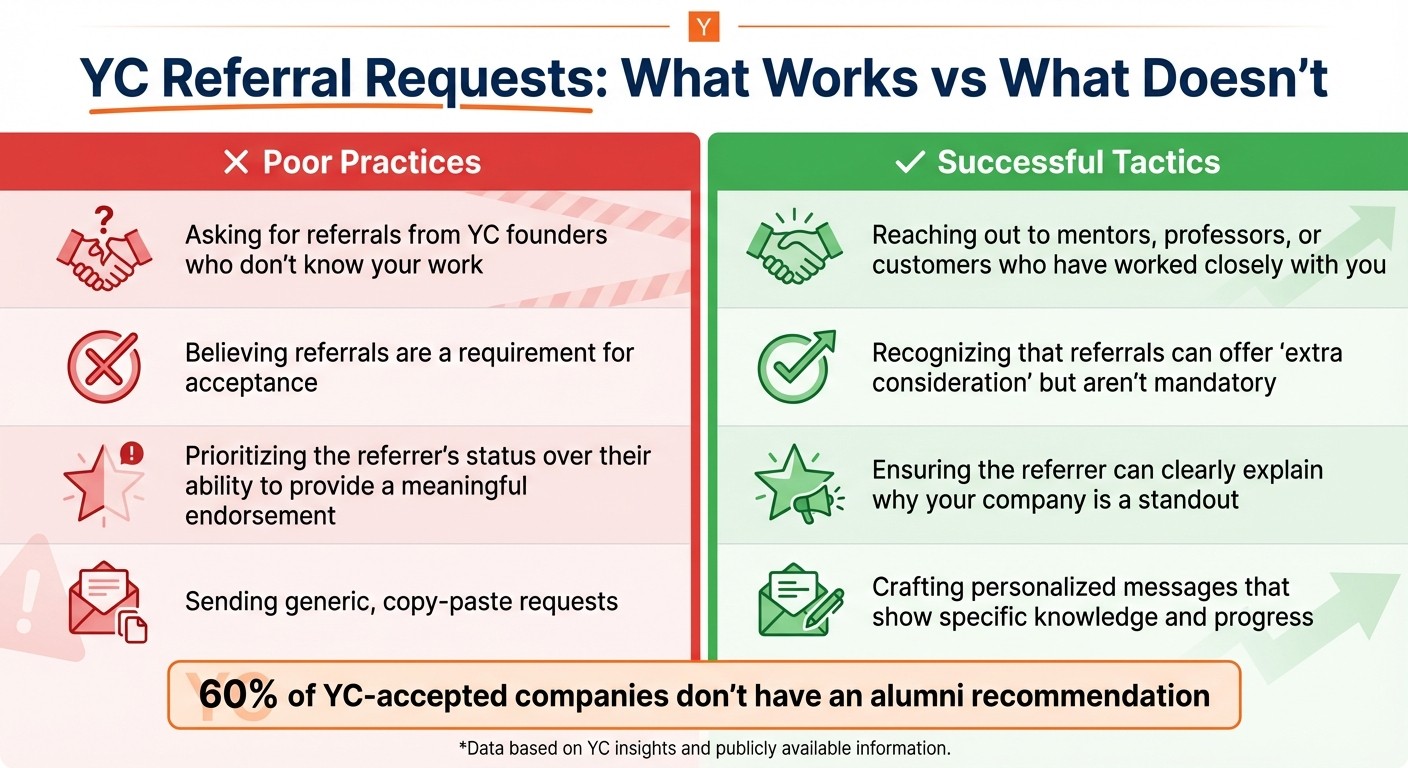
If you're aiming to leverage YC referrals effectively, it's important to steer clear of common missteps. A common misconception among entrepreneurs is that a YC referral is a must-have for acceptance. In reality, 60% of companies accepted into YC don't have an alumni recommendation. Kat Manalac, Partner at YC, puts it plainly:
YC does not want to send the message that recommendations are needed to get accepted to YC.
One of the biggest mistakes? Name-dropping or seeking referrals from YC founders who barely know you. As Sam Altman, Former President of YC, points out, the value of a referral lies in its substance:
References are very helpful in any decision about who to work with - there's so much value in understanding how someone performs and improves over years on a job.
A referral from someone who can't vouch for your work won't carry weight, no matter how impressive their title or reputation.
Poor Practices | Successful Tactics |
|---|---|
Asking for referrals from YC founders who don’t know your work | Reaching out to mentors, professors, or customers who have worked closely with you |
Believing referrals are a requirement for acceptance | Recognizing that referrals can offer "extra consideration" but aren’t mandatory |
Prioritizing the referrer's status over their ability to provide a meaningful endorsement | Ensuring the referrer can clearly explain why your company is a standout |
Sending generic, copy-paste requests | Crafting personalized messages that show specific knowledge and progress |
The key takeaway? Focus on building authentic relationships and showcasing measurable achievements. These strategies will ensure your outreach feels genuine and impactful, as we’ll explore further.
How to Avoid Coming Across as Insincere
Even when you follow best practices, the tone and approach of your request matter immensely. Personalization is non-negotiable. Harj Taggar, Cofounder of Triplebyte, highlights this:
For your message to stand out from the crowd you need to put in work to make it personalized.
A generic, transactional tone can quickly undermine your efforts. Instead, show sincerity by demonstrating real progress. Whether it’s launching your product, improving metrics, or increasing revenue, actions speak louder than words. YC values honesty, as their interview guide emphasizes:
the more we feel confident that our conversation is sincere, straightforward and natural, the better.
Avoid being the person who sends a single email and then vanishes. Thoughtful follow-ups show genuine interest, but be mindful of the founder's time. Persistence is good, but overdoing it can backfire.
Finally, remember this: while referrals can help, they’re no substitute for a strong application. Focus on showcasing your traction, team, and vision - those are the elements that truly make the difference. Referrals are just the cherry on top.
Conclusion: Getting the Most from YC Founder Referrals
YC founder referrals can give your application a boost, but they’re not the deciding factor. In fact, 60% of companies in YC's Winter 2017 batch were accepted without any alumni recommendation at all. What truly matters hasn’t changed: having a strong idea, targeting a massive market, and forming a standout team. Referrals are helpful, but your core strengths will always take center stage.
When it comes to referrals, quality trumps quantity. A thoughtful recommendation from someone who knows your work inside and out - like a former colleague, professor, or even an early customer - carries far more weight than a handful of surface-level endorsements. Genuine, earned praise is what stands out.
The key to meaningful referrals isn’t about clever networking or perfectly worded emails. It’s about fostering real relationships over time. For example, practicing interviews with YC alumni or seeking their advice can naturally strengthen connections. But remember, your accomplishments are what truly matter - referrals simply provide context.
At the end of the day, your focus should stay on what counts: building a great product, gaining traction, and assembling an exceptional team. Referrals are just one piece of the puzzle. With over 4,000 startups funded and an acceptance rate of only 1–2%, YC evaluates the whole picture. Create something extraordinary, and the right referrals will come naturally.
FAQs
How can I connect with YC alumni to get a referral?
To connect with YC alumni effectively, begin by forming authentic relationships early. Show genuine interest in their work, offer helpful support, and stay in touch consistently. Keep them updated on your progress, and clearly articulate why you’d be a great fit for YC, making it easier for them to recognize your potential. Be receptive to their feedback and follow up thoughtfully to nurture the relationship. Building trust takes time, but authenticity and consistent effort can lead to a meaningful referral.
What mistakes should I avoid when asking for a YC referral?
When asking for a YC referral, steer clear of these common mistakes:
Delaying relationship-building: Start engaging with potential recommenders early. A last-minute request can come off as rushed or insincere.
Failing to communicate clearly: Be sure to explain your startup’s vision, milestones, and future plans in a way that’s easy to understand.
Picking the wrong person: Choose someone who knows your business well and genuinely supports it, rather than opting for a weak or surface-level connection.
Making it difficult for them: Share concise, organized details to help them craft a strong, informed recommendation without too much effort.
By planning ahead and respecting their time, you’ll improve your chances of securing a referral that genuinely supports your application.
How important is a YC referral during the application process?
A referral from YC can give your application a boost by showcasing your connections and signaling progress within the startup world. That said, it’s not a must-have for getting accepted.
YC places the most weight on the strength of your idea, the quality of your team, and your potential to succeed. Plenty of startups have been accepted without a referral by proving their creativity and drive.